Equipment for Material Handling in India
Equipment for material handling covers everything a warehouse or plant uses to move, lift, store, and position goods — from a simple pallet truck to a hydraulic scissor lift. Get the selection wrong, and you end up with slow loading, damaged stock, and workers doing jobs a machine should be doing.
And if you do, material movement within the facility becomes predictable. Less congestion, fewer injuries due to manual handling, quicker order delivery times.
This guideline outlines the various material handling equipment, applications of each one of them, and the factors that need consideration before selecting a supplier.
Key Takeaways
- Material handling equipment comes in various types depending on its application for transportation equipment, lifting equipment, and positioning equipment.
- The right equipment depends on load weight, frequency of use, and floor space — not just price.
- Working with established material handling equipment manufacturers means better after-sales support and spare parts availability.
- Electric and battery-powered equipment is becoming the default choice for indoor operations due to lower running costs and quieter operation.
- A mix of equipment types, not a single machine, usually covers a facility’s full range of handling needs.
What Is Material Handling Equipment?
Material handling equipment includes any type of equipment that is involved in moving, loading, storing, and controlling the movement of materials during storage and manufacture.
The goal is always the same: move material from one point to another safely, without unnecessary manual strain, and without slowing down the rest of the operation.
Main Categories of Equipment for Material Handling
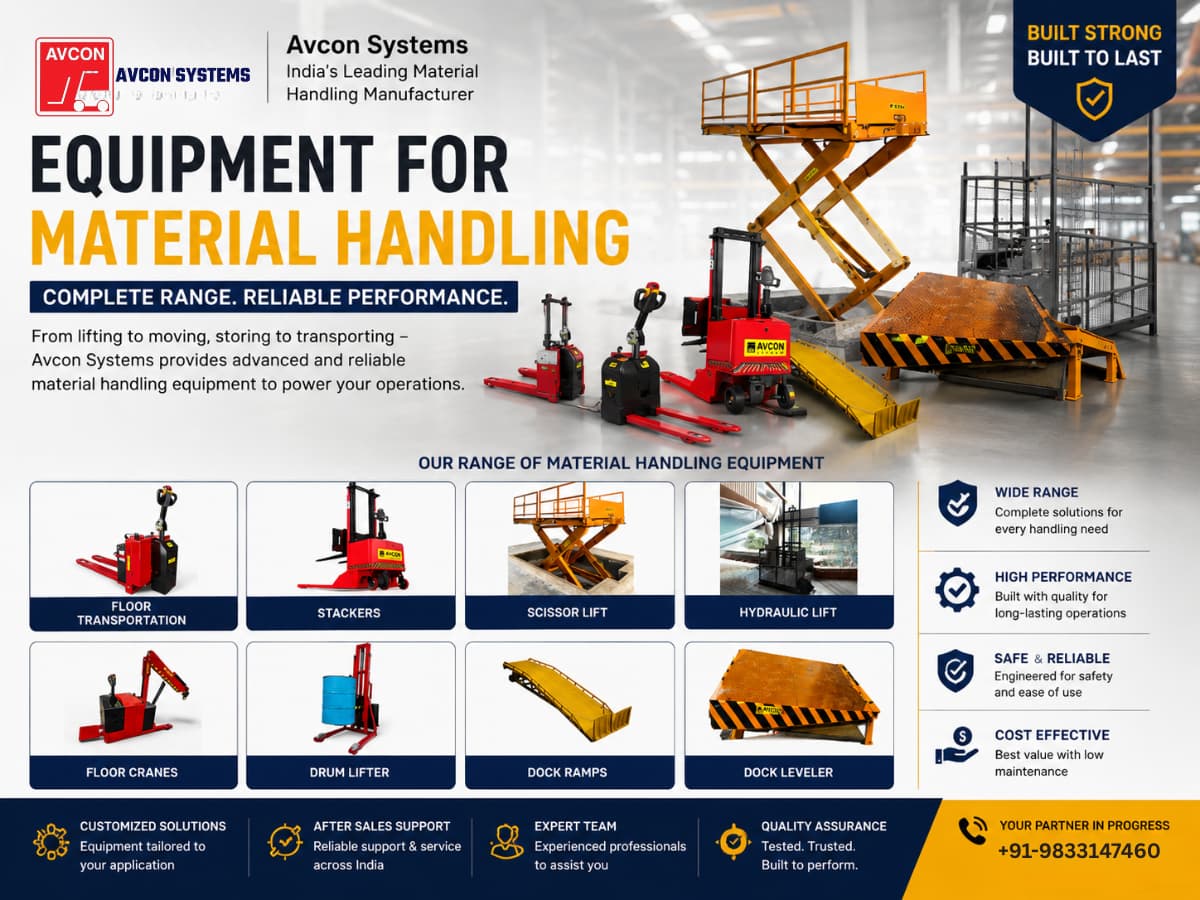
Transport equipment moves goods horizontally across a facility. Pallet trucks and stackers fall into this category — they’re the equipment most warehouses use daily to shift pallets between storage and loading areas.
Vertical lifting machinery is responsible for moving the load up or down. These machines include scissor lift, hydraulic lift, and floor crane.
Positioning equipment handles specific, repetitive tasks — a drum lifter for moving and tilting drums safely, for example, or a dock leveler and dock ramp for bridging the gap between a warehouse floor and a truck bed during loading.
Most facilities need a combination of all three rather than relying on one machine to do everything.
Handling Equipment Manufacturers: What to Look For
Not every supplier offering handling equipment manufacturers’ catalogs actually stands behind the product after it’s sold. A few things worth checking before you commit:
- Whether the manufacturer tests load capacity and publishes it clearly
- Availability of spare parts and service support after installation
- Range of products — a manufacturer covering transport, lifting, and positioning equipment can usually match your setup better than one offering a single product line
- Experience across industries similar to yours — automotive, FMCG, cold storage, and general warehousing all put different demands on equipment
Avcon System manufactures and supplies a full range of material handling equipment, including Stackers, Scissor Lifts, Hydraulic Lifts, and Floor Cranes,
Manufacturing Material Handling Equipment: Why It Matters Where It’s Built
Where and how equipment is built affects its long-term reliability. Locally manufacturing material handling equipment generally means faster turnaround on custom sizes, easier access to spare parts, and shorter response times if something needs repair — all of which matter more once the equipment is actually in daily use than they do on a spec sheet.
Imported equipment can offer advanced features, but delays in sourcing parts or servicing units can cost more in downtime than the equipment saves in upfront price.
What Buyers Should Consider Before Choosing Equipment
Load and frequency: An apparatus designated for infrequent use will wear out quickly when used on a daily basis. Consider the actual frequency and load to which the equipment will be subjected when designing.
Floor space and layout: Scissor lifts and floor cranes need clearance to operate safely. Measure your actual working area before finalizing equipment size.
Source of power: Battery-operated stackers and pallet trucks have become the norm for use indoors due to their quieter operation, low maintenance compared to hydraulic or fuel-operated machines, and suitability for cost reduction.
Total costs: The least expensive machine at purchase is not necessarily the least expensive machine to operate over time.
Finding the Right Material Handling Equipment Suppliers
A good supplier does more than deliver a product. It is best to source suppliers of material handling equipment that have pre-purchase services of doing an evaluation of your property, followed by installation and commissioning services, and training for the operators, particularly in cases of powered material handling equipment like the scissor lift and the hydraulic lift.
In addition, suppliers with diversified product lines such as pallet trucks and dock levelers among others make it easy to standardize the equipment and the spare parts as well.
Frequently Asked Questions
What is the most common type of material handling equipment?
Pallet trucks and stackers are the most widely used, since nearly every warehouse needs to move palletized goods regularly.
How do I choose between manual and powered equipment?
In the end, it depends on frequency and payload. Manual equipment will do for occasional and light duties while powered equipment will pay itself off in case of increased frequency or payload.
Are electric material handling machines reliable for daily use?
Yes. Battery-powered stackers, pallet trucks, and lifts are built for continuous daily operation and typically need less maintenance than hydraulic or fuel-based alternatives.
What should I check before buying from a manufacturer? Confirm load capacity testing, spare parts availability, and after-sales service response time before finalizing a supplier.
Can one supplier cover all my material handling needs?
Often yes — manufacturers with a full range, from transport to lifting to positioning equipment, can outfit an entire facility and simplify spare parts and service.
Conclusion
Choosing the right equipment for material handling comes down to matching the machine to the actual job — load, frequency, floor space, and power source all play a part. Avcon System manufactures and supplies a full range of material handling equipment, from pallet trucks and stackers to dock levelers and floor cranes, built for daily industrial use across India.